
No-one knows your Volkswagen better than we do. So you can relax when your car is in for service, maintenance or repair, knowing it’s in the safe hands of experts who have the latest Volkswagen training and access to our advanced tools and technology.
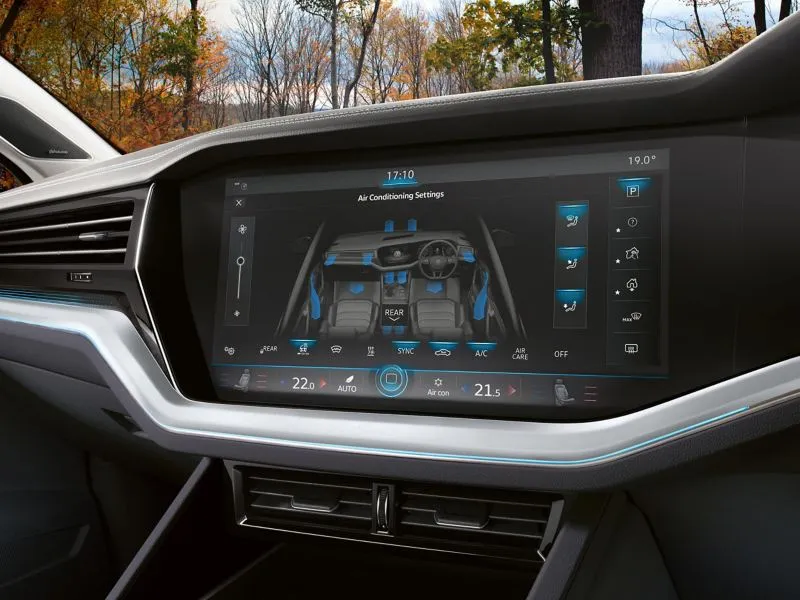
Your air conditioning system can become full of bacterial and fungal contamination. A refresh treatment disinfects the evaporator and air ducts safely and effectively.
Bacterial build-up in the ventilation system not only smells bad, it leads to poor airflow. This means you breathe in bacteria and allergens which could irritate your eyes and nose.
Our experts technicians give you air conditioning system an ultrasonic anti-bacterial and odour treatment that eliminates microbial, fungal and bacterial contamination.
Every 12 months.
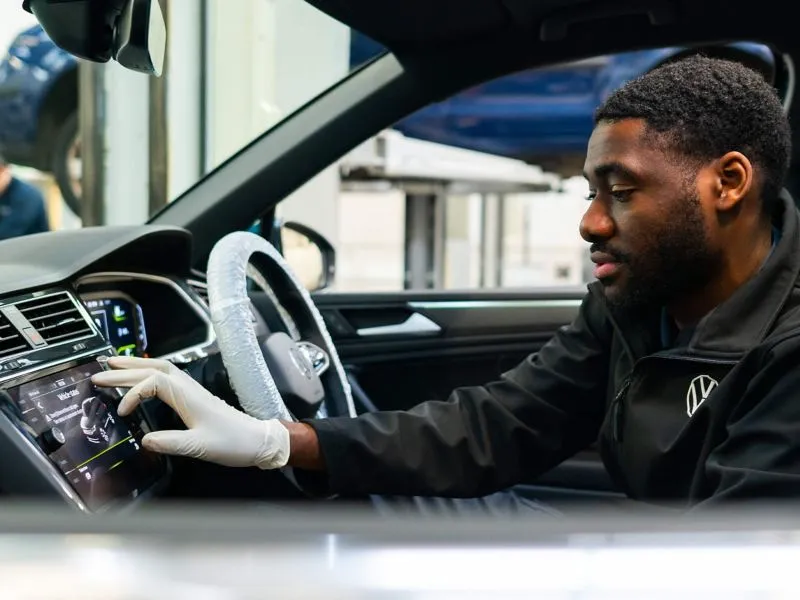
Your air conditioning system can lose up to 10 percent of its gas each year. Unless it's replaced the system will be less able to keep you cool and refreshed.
The system will continue to lose gas, become less efficient and lead to increased fuel consumption. It will eventually fail and need replacement parts.
We drain and recharge the system; check hoses, filters, belts and connections; and make sure the compressor and condenser are working correctly.
Volkswagen recommends every 2 years.
For more information watch our air conditioning service video
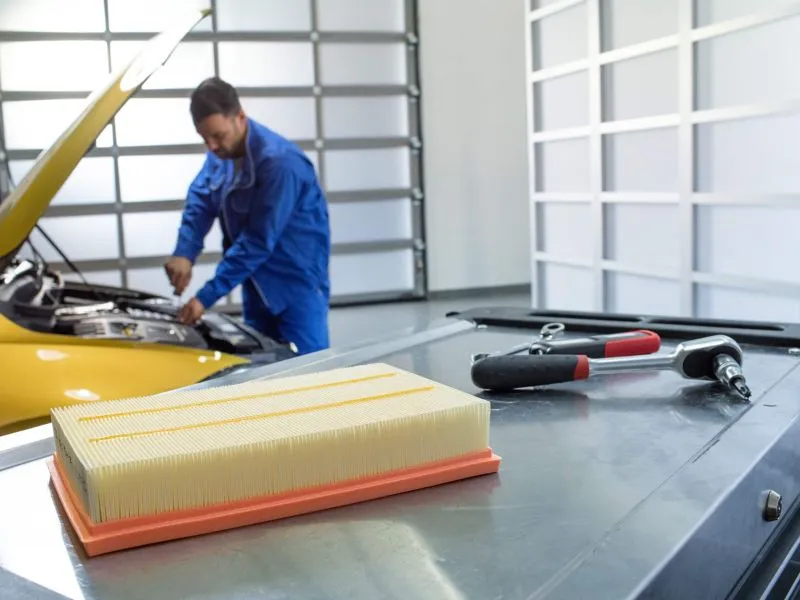
Your air filter stops dirt and dust particles entering the engine. Just like your vacuum cleaner, it needs to be kept clean to work properly.
Fresh air is vital for your car's engine to perform well. If the air filter is not replaced when needed it could lead to a drop in performance as the engine tries to 'breathe' through a dirty filter. Your car could then be difficult to start.
We remove the old filter; check and clean the housing and hoses; then fit a new filter.
Changing it is part of a major service.
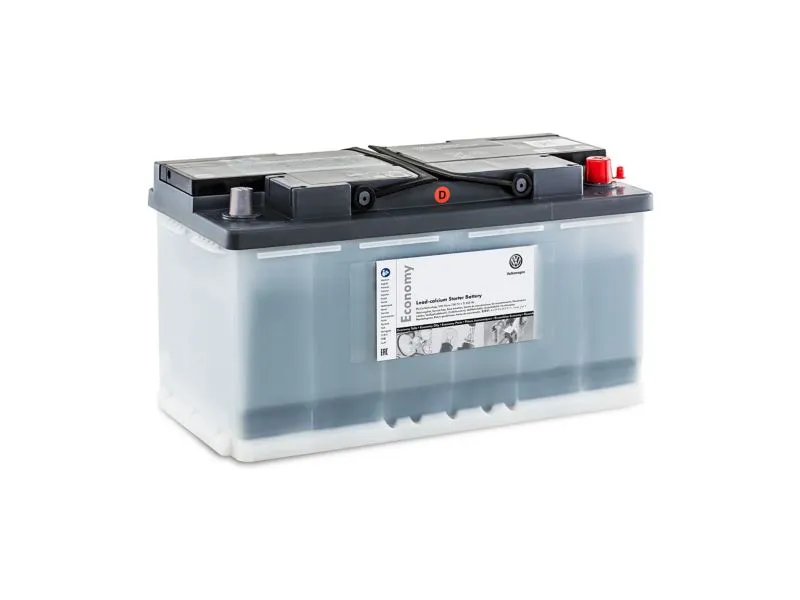
A fully charged battery supplies around 12.6 volts. If this falls to 12.0 volts, the state of charge drops from around 100% to around 25%. Conductivity is reduced by low temperatures, so if your battery is not holding its charge your car may not start in cold weather.
Sludge builds up in the bottom of the case and can short the cell out. Deep discharges, heat, vibration, over-charging, under-charging or non-use all speed up the ageing process. In the end, if not replaced the battery will fail, and one day your car won't start.
We check the battery's ability to hold its charge. We may need to replace the battery if it's not holding a charge, or look at why it's not charging when you drive.
At every service.
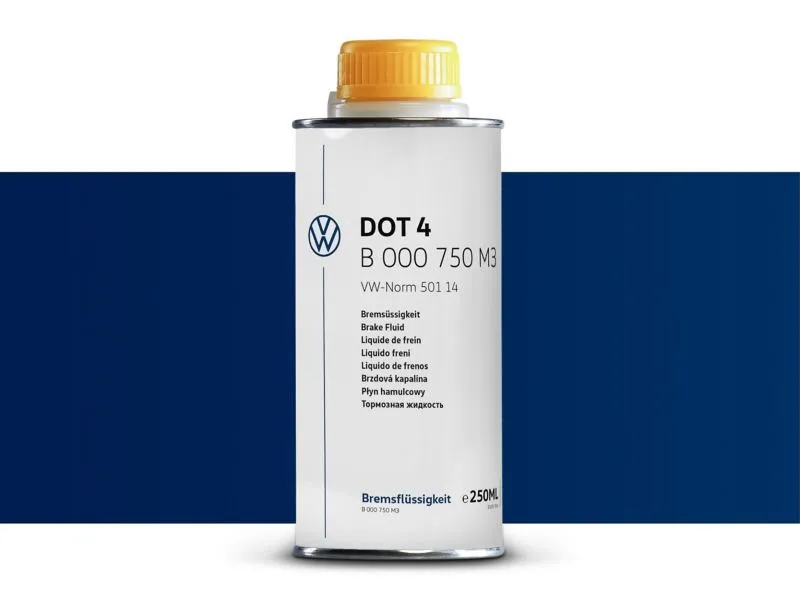
Brake fluid must withstand operating temperatures of up to 230°C but over time absorbs water which boils at 100°C. As the water boils, it turns to compressible vapour which means you won't be able to brake as efficiently.
If too much moisture builds up, the brake fluid can boil while you're braking, seriously affecting performance. It can cause the brakes to fail. A spongy feel to the brake pedal shows you this has started to happen.
We check the level and look for leaks. We drain the system and fill it with new brake fluid. We test the system and record it in your service book.
At year 3 and every 2 years after that
For more information watch our brake fluid change video
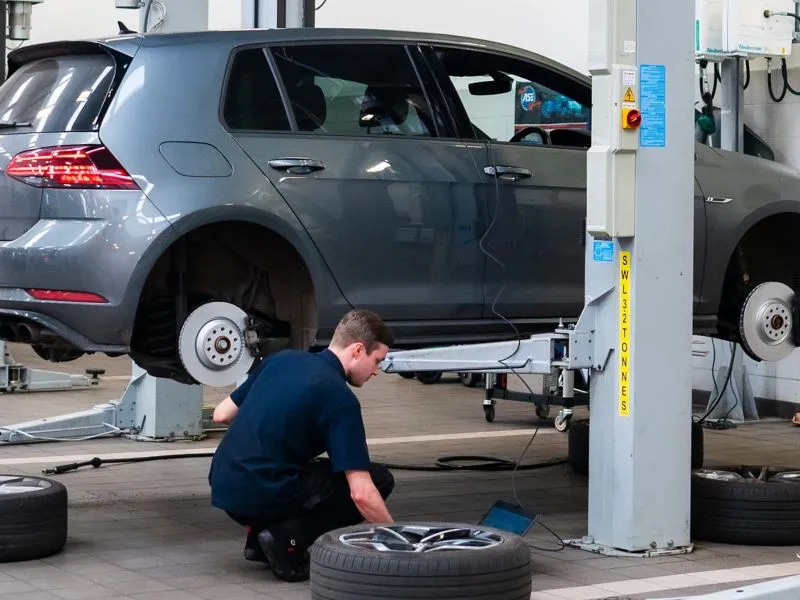
When you brake, the brake discs that rotate with the wheels are gripped by brake pads, slowing the car down. Both discs and pads can become worn and corroded, so it's vital they are checked regularly for your safety.
If your brakes aren't maintained regularly you won't be able to brake as efficiently. As well as reduced stopping power, worn or corroded brake parts can make your car vibrate and become really noisy.
We measure the brake pad wear level. If the pads or discs are worn, corroded or warped we will let you know so we can arrange to replace them. It is not always necessary to remove the wheels to check the brake pads (pad wear/thickness, disc condition), but where a further detailed inspection is required (or if the wheel does not allow full visibility) the wheel(s) may be removed.
At least once a year.
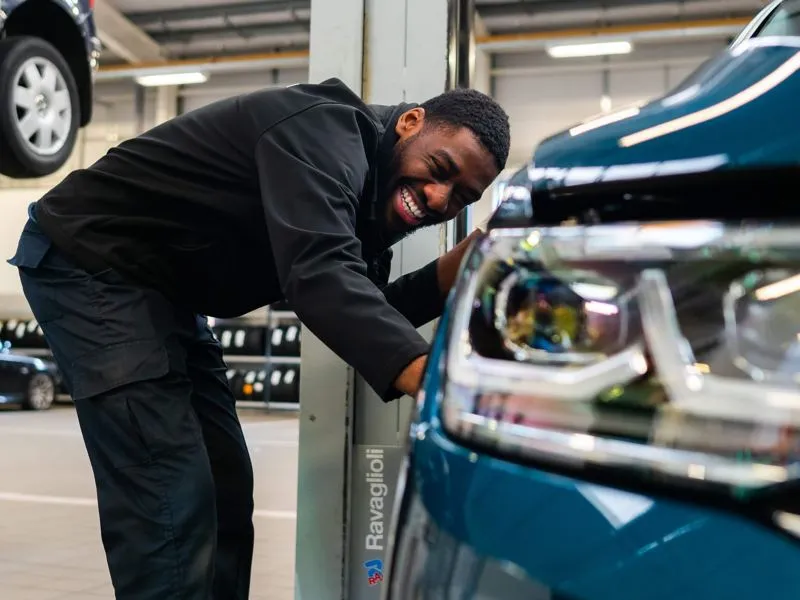
Bulbs need changing when they become defective. It's important you check all your lights regularly to ensure road safety. You could be stopped by police if your lights and indicators are not working correctly.
If a headlight is out, you won't be able to see the road ahead properly. If a brake light is out the person following you may not stop in time. You could also be stopped by the police and issued with a fixed penalty or vehicle defect rectification notice.
We'll check all your bulbs to ensure they're working correctly, free of charge. If they need replacing, we'll offer a competitive quote and you'll be covered by our Price Match promise - we'll match any like-for-like quote within 5 miles of your retailer.
Replace when faulty.
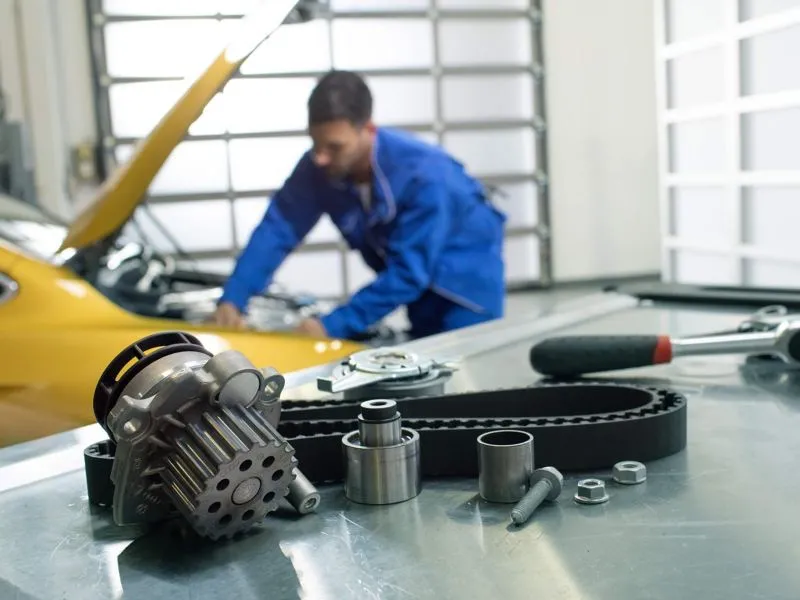
The cambelt is one of the hardest working parts in your engine, driving major parts of the engine and keeping everything synchronised. Changing it prevents snaps, cracks and tears which in turn minimises the risk of major engine damage.
The belt can go slack, making it snap or jump. This can cause severe damage to the engine. Your car will break down and could be very expensive to repair.
We strip down the relevant parts of the engine and renew the cambelt and cambelt tensioner. Then we reassemble the engine and road test your car.
4 - 5 years (4 years for cars registered before September 2009, 5 years thereafter). This may need to be changed sooner for high mileage drivers.
For more information watch our cambelt change video
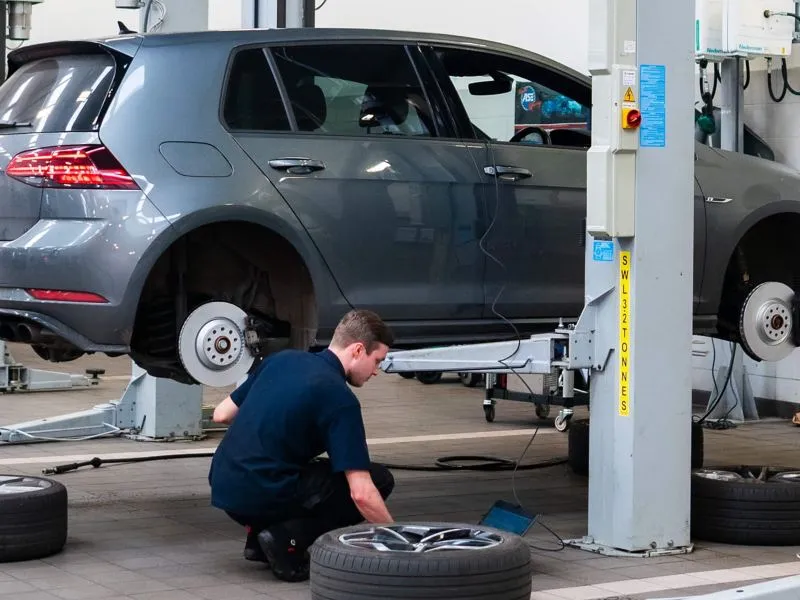
When you brake, the brake discs that rotate with the wheels are gripped by brake pads, slowing the car down. Both discs and pads can become worn and corroded, so it's vital they are checked regularly for your safety.
If your brakes aren't maintained regularly you won't be able to brake as efficiently. As well as reduced stopping power, worn or corroded brake parts can make your car vibrate and become really noisy.
We measure the brake pad wear level. If the pads or discs are worn, corroded or warped we will let you know so we can arrange to replace them. It is not always necessary to remove the wheels to check the brake pads (pad wear/thickness, disc condition), but where a further detailed inspection is required (or if the wheel does not allow full visibility) the wheel(s) may be removed.
At least once a year.
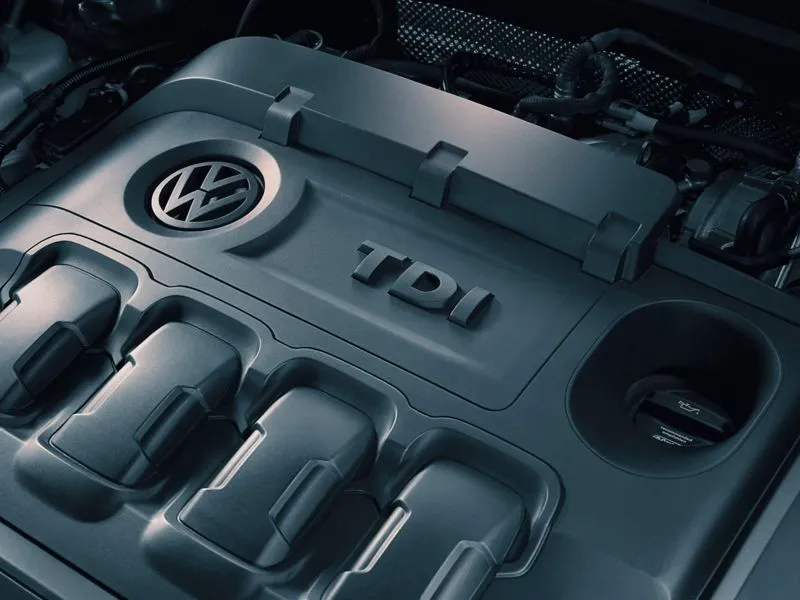
Your engine's fuel filter removes dirt, rust, water and other contaminants from the fuel entering the engine. Filter could become blocked if not replaced at the prescribed interval.
Clean fuel is vital for your car's engine to perform efficiently. Failure to replace the fuel filter when needed could lead to a drop in performance and could mean your car won't start.
We remove the filter from the fuel system and replace it with a new one.
At the recommended age or mileage limit.
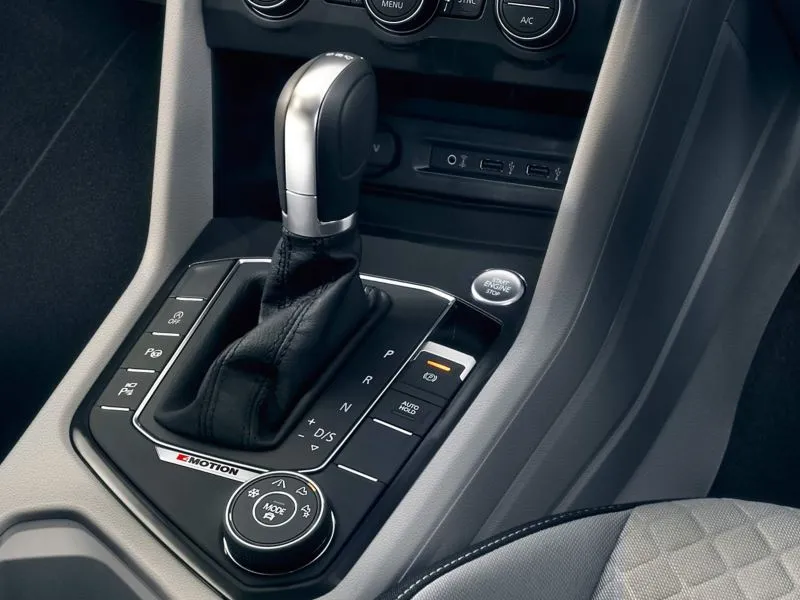
This sophisticated piece of engineering needs regular oil changes. The smooth two-clutch system is computer-controlled with very fine engineering tolerances. If the gearbox oil is dirty it will damage the other parts and affect the performance.
Dirty oil can overheat the gearbox or cause the clutches to burn out. This will lead to poor gear selection, loss of power and transmission failure.
We check the gearbox for leaks, drain it and replace the oil filter* before filling it with high quality gearbox oil to Volkswagen approved standards.
*Only on applicable vehicles
The oil, every 40,000 miles, the filter may need to be changed as well.
For more information watch our DSG oil change video
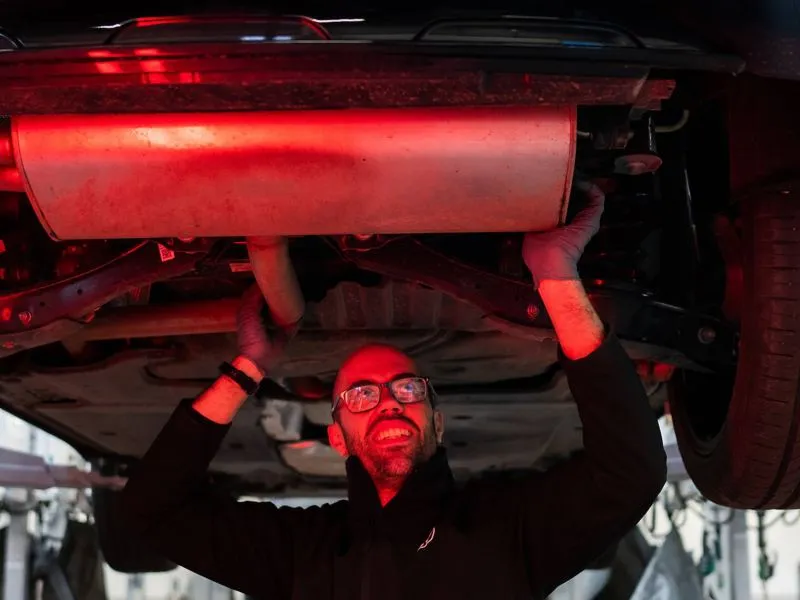
Exhausts systems are designed to reduce harmful emissions, reduce engine/combustion noise whilst channelling the fumes away from the vehicle to ensure no fumes enter the vehicle cabin whilst driving. Exhaust systems can corrode under normal conditions and is therefore subject to wear and tear. which could result in leaking joints or broken hangers and excessive noise.
An exhaust that has failed can not only be noisy, reduce engine output and fuel efficiency, but exhaust fumes could enter the vehicle cabin making the occupants feel drowsy.
We check the exhaust system for leaking joints, excessive noise and corrosion, broken hangers and weak rubber mountings.
How long your exhaust lasts depends on how far and how often you drive your car rather than the length of time it has been fitted. For example, lots of short journeys would tend to create greater exhaust corrosion than cars that primarily drive long distances.
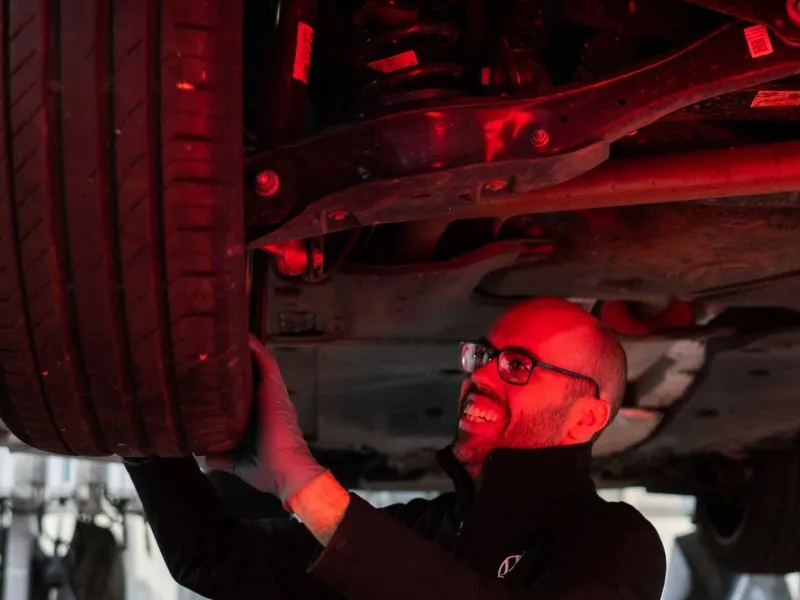
To ensure even tyre wear and correct handling of your car. This should be done if you're worried about uneven wear or the effects of an impact you've had (hitting the kerb or a pothole, for example).
Your car may pull to one side, the steering wheel may vibrate and you may have to keep adjusting the steering to keep your car travelling straight.
We perform an Express Visual Check (EVC) for wear and tear. We then check the tracking, caster, camber and thrust angle of your wheels on our Four Wheel Alignment machine, adjusting anything as required. We then retest your car and road test it before giving you an accurate diagnostic print-out.
When necessary.
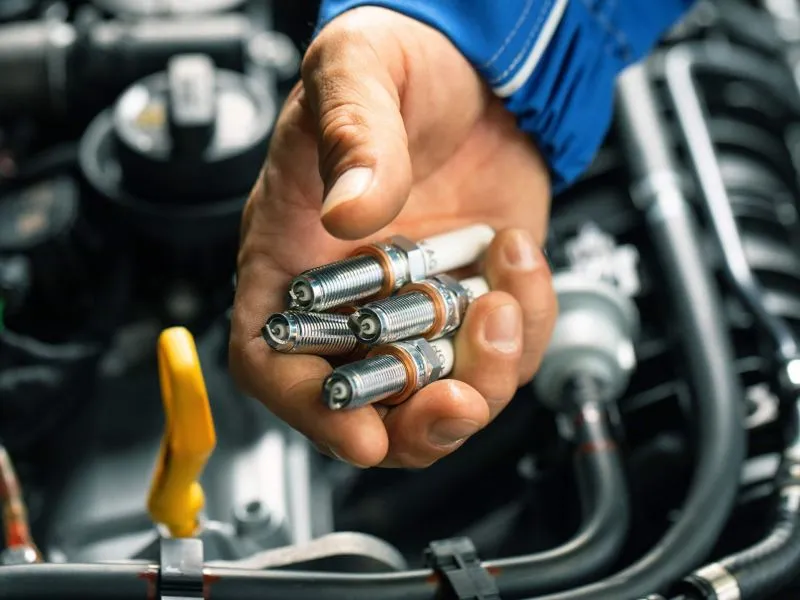
Spark plugs operate in an extreme environment of high temperatures and high pressures. Over time they degrade and become less efficient.
A powerful electric spark is needed to ignite the mixture of fuel and air in your engine. If a spark plug is used too long it is less able to ignite this mixture, leading to an inefficient engine and lack of performance. This can cause potential engine damage and means you use more fuel.
We remove the spark plugs from the engine, inspect them (they can tell us a lot about how your engine's performing) and replace them with new ones.
We replace them at every major service.
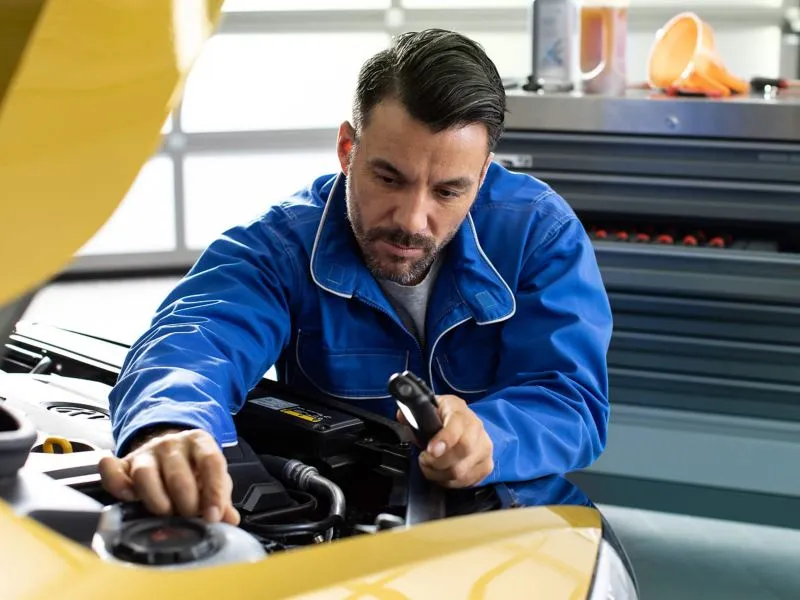
Having your car serviced regularly will ensure it stays in peak condition, making sure you get optimum performance and endurance from all components.
Your car's reliability and efficiency may be affected. And without a regular check, problems may go unnoticed, resulting in higher repair costs. Also, you don't get a Volkswagen stamp in your servicebook, which can affect the price that buyers are willing to pay for your car when you want to sell it.
Volkswagen trained technicians, using specialist tools and technology, carry out the recommended service, tailored to your car. We will replace the filters and lubricants specified and road test your car before recording the service in your servicebook.
Most Volkswagens: Fixed service regime 10,000 miles/ 12 months
Longlife Servicing: when service indicator light is on